

Why You Should Choose Bristol Industries of PA
When you’re buying a gangway or a docking system, especially for those new to the maritime lifestyle, the whole process can no doubt feel overwhelming. So many manufacturers, so little time. Thankfully, we at Bristol Industries of Pennsylvania have spent decades gaining the know-how, building the repertoire, and perfecting our process to become your all-in-one destination for your maritime solutions anywhere, anytime. Here are just a few of the tricks of the trade we’ve gathered over the years, and our answer to the simple question many people ask when they arrive on a manufacturer’s website: “Why Them?”
- High Quality Products
We use only the highest-grade materials in building our gangways, piers, and docks. Our long-lasting aluminum designs are crafted to withstand corrosion in both fresh and salt water environments and be resistant against the effects of extreme weather.
Even in our office, we have a sign reading “The bitterness of poor quality lingers long after the sweetness of a cheap price is forgotten.”
- Locally Owned and Operated
Ever since our opening back in 1988, we have always been a small, independent business. When you buy from us, you are not only helping your local community, but also experiencing service that is authentic, genuine, and 100% human. No frustrating, bureaucratic layers at all.
In addition, all of our docks & gangways are built from start to finish in our Langhorne, PA location as well.
- Quick Delivery
When it comes to our gangways, our turnaround time is only 7-10 days, compared to most other businesses estimated at 4 weeks. All of our other products are guaranteed to be delivered ASAP to help get you coasting along the water immediately.
- Strong, Reliable Network
Buying from us doesn’t just get you a new gangway or dock, it gets you access to a whole network of expert contractors and installers that can help you with not just installation, but any kind of service that you may need.
In conclusion, Bristol Industries of Pennsylvania has been providing our customers with all this and more for over 35 years. If you would like to learn more, give us a call or request a quote today!
Why Aluminum Gangways Always Beat the Fall and Winter
The cold weather has unfortunately returned. It’s sadly time to start raking the leaves, bundling up when going outside, and before you know it, the harsh weather will be coming. For dock owners, this leads into the question: Is your gangway protected? While many boaters have prioritized dock protection above all else (and rightfully so), there’s still the importance of ensuring that your gangway can survive winter’s cruel extremities. After all, your gangway is how you’ll access your dock in the spring. One of the best ways you can be sure that your gangway will make it to the warmer months is making sure it’s made of high quality aluminum. While the wooden style no doubt has it’s traditional charm, aluminum gangways carry many practical advantages that makes them a true modern maritime solution for the freezing months.
- Resistant Surface
Aluminum planks are a clean, sleek, waterproof surface that can withstand any impact from moisture. Wooden planks on the other hand, can become dirty and show age relatively quickly. Due to its cellular structure, wood can also absorb any form of wetness which can in turn lead to swelling and rotting, causing the entire gangway to deteriorate.
- Virtually Maintenance-Free Design
Not only does a strong surface protect aluminum gangways from the effects of the cold, but it also keeps it up and standing throughout the winter with little to no effort. The most that could happen is snow and ice removal, and checking if certain parts are intact. No painting, no refinishing, and no replacing decayed dock planks.
- Weight
Being lightweight is one of the aluminum’s main features as a metal, which has made them quite popular among gangway owners and manufacturers. Not just because it makes transportation and assembly easier, but it also keeps weight off the floating dock as a whole. This can allow the dock to stay afloat during the winter, or if you’re the type that puts your dock and gangway away for the winter, the process just got 10x easier.
Make your wait for the spring as anxiety-free as possible. Our gangways at Bristol Industries of PA are expertly crafted to match all of the above features and more. If you would like to learn more about purchasing a gangway in the fall, click here or give us a call today!
Is Fall the Best Time to Buy an Aluminum Gangway?
The fall season is a time of year that is beloved by many around the world. The beautiful scenery, the cozy atmosphere, and the sweet smell of pumpkin. However, for boaters, everything that makes fall great comes with one major price: the end of sailing season. With winter temperatures on the horizon, it’s time to sadly pack up the dock (read more about that here) and move the boat back into the garage.
While you’re stowing your wooden gangway back into storage, you notice that the walkway may have sadly run its course. The deck is rotting, the screws are rusting, and the wheel just fell in the water. You realize that it might be time for one made of aluminum, but should you buy now? Summer just ended, the next season doesn’t start for another 7 months.
The answer to that question is an absolute yes. While buying a gangway in the fall may seem pointless, it actually carries many benefits that you wouldn’t get from purchasing in the summer.
- Cool (but not too Cool) Temperatures
Fall acts as the calm before the storms of winter. If you live in the northeast, you know how frigid the air can get. That’s why if you’re considering buying a gangway after the summer, it’s best to request your quote as early in the fall as possible. That way, the designers, manufacturers, and installers have plenty of time to provide you with your new walkway before the cold weather really kicks in. It also spares you of having to witness its installation during a blizzard too.
- Greater Availability
Fall is typically post-peak season for not just boaters, but gangway installers and manufacturers as well. This creates plenty of opportunities to build and set up your new, upgraded pathway to the wide open waters and make your dock look truly complete (even if you can’t go boating just yet).
- Get Ahead on Springtime Preparations
After a long, cold winter, there’s nothing like getting back on the water and breathing in the fresh air. So why make yourself put it off for even longer? By getting your new gangway in the fall, it guarantees that, as soon as the weather warms up, you’ll be able to venture right out of your house and onto the wide open seas.
If you’re interested in making the upgrade to start the spring off right, give Bristol Industries of Pennsylvania a call today at 215-493-7230 or request a free quote here!
How to Prepare a Floating Dock for the Winter
Well, it’s that time of year again. The nights are getting longer, the temperature is getting lower, and boaters unfortunately have to start putting away their docks. While this may seem tedious and inconvenient to some, it is still a crucial part of dock ownership. If a dock is left outdoors unprotected in the cold, it risks potential damage brought on by the incoming ice, snow, or freezing water. Thankfully, with these simple steps, you can easily pack up your dock to help ensure that not only will it survive the bitterness of winter, but it will enter the spring as high-quality as the day it was installed.
- Undo the Pile Hoops
First, if you want to move the dock out of water, you will have to make sure it’s not attached to any fixed mounts, otherwise it will not move at all. This is why the first step is disconnecting the pile hoops. After locating and removing the outer plate, it is important to keep your hand on it so you can unscrew the necessary nuts and bolts. After this, the dock should no longer be joined with the piling and able to move away from its position in the water.
- Walk Dock Underneath the Gangway
Now that your dock is more mobile, the next step is to move it closer to the bulkhead. If your dock is accessed with a gangway, make sure it is kept underneath the gangway to assure no damage to either walkway occurs during the process.
- Disconnect Gangway and Lower Down to Dock
The next important step is to detach your gangway from your bulkhead or pier. This can involve the removal of several parts and accessories, such as the piano hinges, transition plates, and UHMW wheels. After the disconnection is complete, it may be possible for you to remove your gangway’s handrails to make your storage easier (depending if your gangway was made with that option).
- Float Dock onto Land
Now that your dock and gangway have been fully disconnected, your final step is to float them onto your shoreline’s boat ramp so they can be stored properly for the next boating season. Make sure to glide them carefully to ensure neither of them are damaged while making their way across. If you prefer, you can use your boat or jet ski to make the transportation easier.
If you would like to learn more about floating docks from one Bristol Industries of PA’s knowledgeable specialists, give us a call or request a quote today!
Why Should You Choose a Floating Dock?
So, you’ve gotten a place by the water? That’s fantastic! Not only is the view and atmosphere absolutely breathtaking, but now you can have your very own dock to enjoy it with. Now, what type of dock you choose, fixed or floating, is very important. If your location’s body of water is relatively stable, such as a small, inland lake, a fixed dock would be most suitable. However, if your coastline tends to be a bit more unpredictable, such as the wide, open ocean, you may need a floating dock. The two of them are not only built differently, but they hold up differently as well. The decision you make between the two will play a crucial role in your maritime lifestyle. Read below for some reasons as to why the two are not only different, but how a floating dock, whilst untraditional, can actually make waterfront ownership easier.
- Adaptability
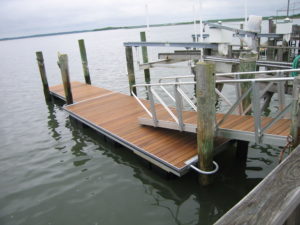
The water can sometimes be an unpredictable place, especially in today’s world. The rampant extreme weather and rising water levels can create a potentially damaging environment for the dock unless it has the ability to adjust accordingly. This is one of the most important features of a floating dock. The use of buoyant floats as opposed to pillars of wood makes the dock system always be above the water levels, ensuring that you will always have access to your boat. Even at Bristol Industries of PA, we always design our aluminum docks with an exclusive non-skid surface and Rotex™ decking to guarantee that your walk across will be absolutely safe, no matter how harsh the storm the other night was.
- Installation
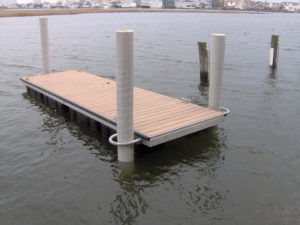
One of the biggest advantages floating docks have over fixed is how easy they are to install. Building a fixed dock can be a very long, complex process. Floating docks on the other hand, are delivered in sections and are very lightweight to make installation as simple as possible. This set-up also makes the dock very easy to transport and store for when the season ends.
- Maintenance
If something is complex to build, it is most likely that maintaining it will also be complex, and fixed docks are no different. Not just routine cleaning, but also leveling, inspecting, and sometimes even buying new materials. Meanwhile, floating docks are famous for requiring very little maintenance, being made of material resistant to corrosion, and having float drums that are very easy to replace even in the rare event of a predicament.
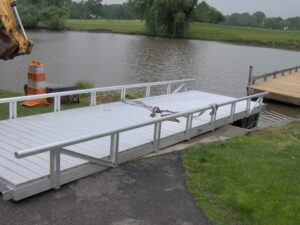
If you would like to know about how Bristol Industries of PA can supply you with your very own floating dock, give us a call at 215-493-7230 or request a quote today!
A Guide to Gangway Accessories
To some, gangways can seem just like a hodgepodge of welded metals. However, there’s a lot more to them than just sliced sticks of aluminum (learn more about that here). In a lot of cases, your gangway is the only thing standing between you and a fun time out on the boat or waterfront. Even after the gangway is completed, there are also plenty of accessories that not only further complement its design, but also add some more practicality to it as well. Here are just some of the best additions to your gangway that you should consider, whether you’re buying a new one or looking to upgrade your current one.
- Gangway Gate
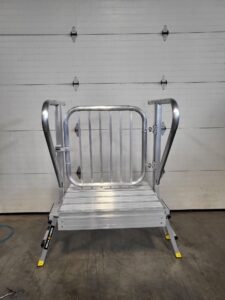
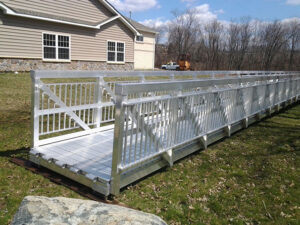
This has always been a popular add-on and for good reason. The key and latch provide an extra layer of security, it’s incredibly simple and convenient to use, and it can blend into the rest of the gangway perfectly. In addition, the gate is made with the same aluminum as the gangway, so expect identical strength and durability. It’s not even limited to just gangways either, gates can be put on floating docks, piers, and ramps too.
- Pickets
It’s a well-known fact that children love to sail. Nothing evokes the mind and imagination of a young child like the wide open sea. It’s important that we prioritize the safety of these children on our boats, docks, and even our gangways. That’s where the addition of pickets come in. Having a gangway with pickets not only adds an extra layer of style, but also makes a much safer passage for small children.
- High Tide Bracket
The water can sometimes be an unpredictable place, and one of the most sudden issues that can occur is an unexpected rise in sea level. This is where a high tide bracket comes in handy. Its design allows the gangway to adjust perfectly with any water elevation in any weather or environment. No matter what happens along your coastline, your gangway will remain perfectly attached to your docking system.
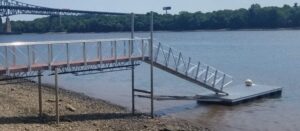
So, while a gangway can seem just a simple walkway on the surface, there are plenty of potential additions that not only enhance its value, but can also make your waterfront a much safer place for both you and your passengers. If you would like to learn more about how Bristol Industries of Pennsylvania can provide you with a gangway that can contain all this and more, give us a call or request a quote today!
Common Questions About Purchasing a Gangway
If you’re interested in buying a gangway for the first time, you most likely have a lot of questions. One of them likely being, “What do I ask the manufacturer?” Buying a gangway can be a tall purchase, and making sure it matches your overall maritime style is more crucial than you may think. While it may seem like just a simple passageway, it’s actually how you (and your potential passengers) will access your dock whenever you sail. It’s an important part of your overall waterfront experience. Fortunately, in the over 35 years Bristol Industries of PA has spent building gangways, we have compiled some of the most popular questions among buyers, and have provided some valuable insight to assist anyone that may have these questions as well.
- How long and wide should it be?
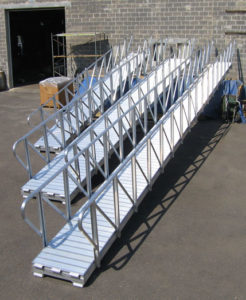
This may sound complicated at first, but determining your gangway’s size is actually a very straightforward process. To find the required length, you simply take the total elevation of your dock by foot and multiply it by 2 ½ feet. For example, if your dock is 4 feet above the water, your equation would be 4 x 2 ½, which means your gangway will have to be 10 feet long.
In terms of determining width, this is more dependent on what you personally plan to use the dock for. If you’re using the dock to make deliveries, a large width would be the most appropriate for getting packages across safely. If you plan to use the dock only for passengers, then a small width would be more fitting.
- What kind of accessories or options should I add?
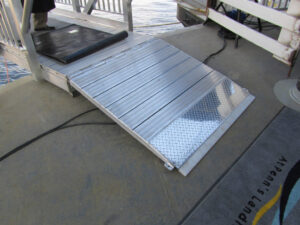
Gangways come with many different accessories and optional add-ons, with purposes ranging from sensible to stylish. Some of the most famous safety accessories include handrails to give pedestrians a much more safe walk across, transition plates, which ensure gapless passage from your gangway to the surface, and toe kicks that prevent loose items from going missing. Not only do all of these make your gangway a much safer place, but they also aesthetically enhance it as well. You can read more about gangway components here.
- What style of decking should it be?
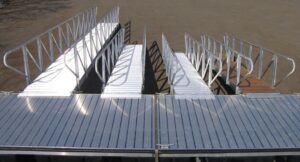
Everyone has their own style, and thankfully they make gangways for each. If you like a glossy, modern look, the ever-popular aluminum would definitely be best for you. If you prefer a design that feels more natural and nostalgic, but still incredibly sturdy, then the famous Brazilian Ipe wood seems more up your alley. If you are someone who likes the authenticity of wood, but hates the potential rotting and splinters, the eco-friendly composite decking would be a perfect look for your gangway.
The process of buying a gangway can no doubt be a complex and overwhelming one, and at Bristol Industries of PA, we always strive to make sure that it’s as simple as possible for our customers. If you would like to learn more, give us a call or request a quote today!
What Type of Gangway is Right For Me?
So, you’ve finally made the decision to buy a gangway for your dock? Fantastic! Gangways are always a great idea to not just enhance your waterfront, but also provide safe, maintenance-free passage to your dock. However, if you’ve never purchased a gangway before, you’re probably thinking, “What kind do I need?”
Gangways not only come in multiple sizes, but they can also come in multiple forms too. When browsing for your ideal walkway, it’s important to know what exactly your options are, and which one will be best for your situation out on the water. Will you need a large, superstructure gangway, or will just a regular one do? Here are just some of the differences that are crucial to know when considering what marine passageway would be right for you.
- Regular Aluminum Gangways:
Starting off with just your simple, run-of-the-mill gangways. For those with just a basic backyard dock for the family or a spot at the local marina, this would be the best for you. The famous non-skid standard aluminum design provides a surface that is immune to the effects of extreme temperature and a structure that resists corrosion in both fresh and salt water so no matter where your dock station is, your passage will always remain intact. If you prefer a much more environmental look, gangways can also be made with composite decking and Ipe wood, while still having the same no-upkeep features.
- ADA-Specific Gangways:
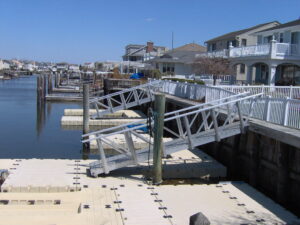
Since the passing of the Americans with Disabilities Act in 1990, there have been several guidelines that may require ADA-compliant gangways for certain commercial waterfronts (learn more about ADA standards here). This is to ensure that anyone can access their dock or boat and enjoy their time at sea, regardless of any disability. There are multiple additions and accessories you can add to ensure that your walkway complies with the ADA’s guidelines, including piano hinges that alleviate gaps, toe kicks that prevent injuries, and side railings across transition plates that give passengers extra security when going on and off your dock.
- Superstructure Gangways:
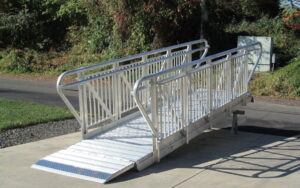
Gangways and ramps are always built to be as safe and sturdy as possible, but what if you have a large ship that will have a lot of foot traffic? For a situation like that, you will definitely need a superstructure gangway. These specific gangways are built with an even superior strength and durability to withstand any potential impact. As a result, your passageway will be able to handle the strong footfall in any climate and still need zero maintenance.
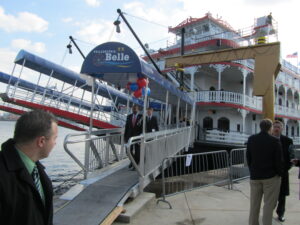
If you would like to learn more about these types of marine walkways and how Bristol Industries of PA can provide you with the highest quality one possible, give us a call or request a quote today!
The Benefits of Owning a Gangway
Congratulations! You’ve just received your very own boating port! Whether it’s a spot at the marina or an entire waterfront in your backyard, you’ve gained your own personal access to the wide, open waters. However, while your dock is both sturdy and stylish, there’s still another important element of accessing your boat you’ve left out: your gangway.
Now, while not every dock is required to have a gangway, it can still be a very useful accessory in building your ideal maritime lifestyle. They carry many uses ranging from visible to viable. Here are just some of the benefits that a well-made gangway can provide for you:
- Experience:
Gangways may seem like a small addition at first, but they can add a lot to your overall sailing experience. The whole experience of walking from to your dock to on a bridge can help give you the feeling that, no matter why you’re going on the boat, you’re about to sail away on to a whole new adventure.
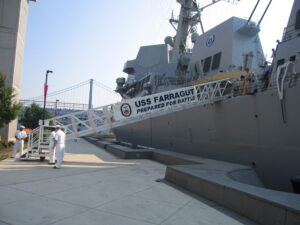
- Style:
Gangways are always a great complement to your dock’s aesthetic. The standard aluminum has always been famous for its sleek, polished layout adding an extra layer of class and cleanliness to your boat. If you prefer a much more natural design, there are styles that can fit that as well. Ipe wood can give you a walkway that exhibits a much more old-fashioned, outdoorsman look, and composite decking can offer a similar sense of authenticity with the added benefits of being low-maintenance and resistant to moisture.
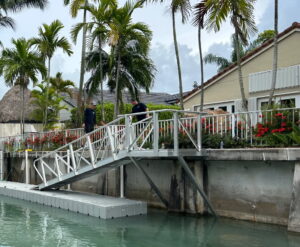
- Safety:
Gangways do come with several amazing safety features. With the most famous and prominent being the handrail, it’s a simple addition that allows you and your passengers a safe walk from your boat to the dock. Another important safety feature in gangways are the piano hinges, which ensure there is no gap between your dock and your boat.

If you would like to learn about how Bristol Industries of PA’s gangways deliver on all these features and more, give us a call or request a quote today!
A Guide to the Important Components of a Gangway
When buying a gangway for your docking system, whether it’s for a marina or a backyard dock, it’s important that it’s just right for you. Not just in terms of color or size, but also in how it’s made. Does it have a strong support system? Is the surface non-slip? Is it ADA compliant? All of these are important questions to ask when purchasing a gangway, but one of the most important questions to ask is, “What does it come with?”
Gangways can come with many different parts and components. It’s important to understand what exactly they are and how exactly they can benefit you and the people that may be riding on your boat. Here are just some of the crucial elements of a gangway you should keep in mind when you’re searching for one:
- Handrails:
Even outside marine gangways, handrails have always been a crucial safety feature in walkways. They provide the people who walk on them with an extra layer of protection from slipping or falling. In addition, a handrail’s design can provide an extra layer of style to your footpath. In some cases, if the length is 16ft or less, they can even be removed to make storage easier.
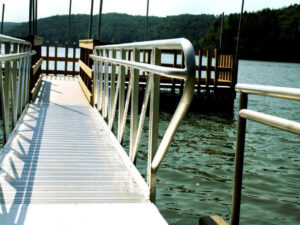
- Piano Hinges:
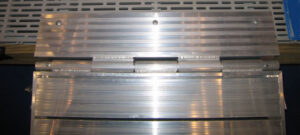
Aside from being required for ADA compliance, piano hinges play an important role in making your gangway as convenient as possible. Unlike typical hinges, piano hinges leave absolutely no gap between the gangway and its connected surface, ensuring smooth and safe movement for all your boat’s passengers. This is especially helpful for those with strollers, pets, and wheelchairs.
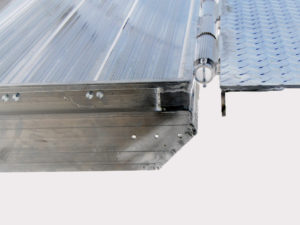
- Optional Transition Plates:
Much like piano hinges, they can play a big role in letting passengers on and off your boat. At the tail end of your gangway, you can potentially have a solid platform utilizing proprietary shapes tapering down with a diamond plate and a curved edge made of incredibly tough plastic that allows a gapless walk from your boat to your dock. In addition, the plate comes built with a piano hinge that helps it adapt to any wave or tidal action that may occur.
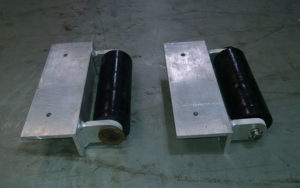
- UMHW Gangway Rollers:
Ultra high molecular weight polyethylene, best known by its acronym UMHW, is a material known for being the toughest form of thermoplastic currently on the market. Being incredibly resistant to the impact of corrosive chemicals and strong abrasion makes it an extra layer of protection for your dock or pier, not to mention having wheels makes it easier to move around and store.
If you would like to learn more about how Bristol Industries of PA’s gangways utilize all of these components and more, give us a call or request a quote today!