

Aluminum Gangways & Winter Pests
The November weather has arrived yet again. That means we are officially approaching the gap between the cool, crisp of fall and the cold chill of winter. For boaters, this unfortunately means a grim truth: It’s getting too cold to sail, and it sadly won’t be warm again for months. It also means that it’s time to put the boat and dock in storage. While putting a floating dock in storage is important (If you’d like some advice about that, click here), gangways are a lot more self-sustaining and weather-resistant. However, if you do decide to keep your gangway outside during the winter, there’s one thing you should keep in mind: pests.
When the people go in, it’s when the animals and bugs come out. The world is their playground, and for some, your unattended gangway can become their winter home. While this may seem like a problem that can resolve itself, it could create some unfortunate wear on your gangway and make usage in the spring unnecessarily complicated. Thankfully, with this information, you should have a clearer idea of what to keep an eye out for this winter, as well as how to prepare your gangway accordingly.
- What kind of pests appear on gangways?
While what animals can invade your gangway can vary based on your location (i.e. somewhere northern will be less likely to have a bird infestation), some of the most common pests to look out for include rodents like mice or rats. When the ground freezes, they will seek shelter in a dry crevice, which can simply mean “underneath the gangway.” It is also crucial to assure that larger animals, such as River Otters and Minks, do not use your gangway as a winter resting place, as their presence can leave behind dirt, and maybe even odors.
- What can you do?
One of the first things you can do to keep small animals off your gangway is to establish physical barriers. For example, simple blocks of wood can be incredibly beneficial in blocking access for active mammals such as raccoons or beavers. If you would like to assure no animals are resting underneath, elevating your ramp is an easy way to check without needing to disassemble.
In terms of preventing any physical damage, if your gangway is made of aluminum, you should have nothing to worry about. Aluminum is made from a nonporous material meant to serve as a discomforting nesting surface. If your gangway is not made of aluminum, now may be the time to make the upgrade.
To learn more about minding a gangway in the off-season, click here or give Bristol Industries of PA a call today at 215-493-7230.
Commercial Gangways and the Off-Season
Winter is near, and for you marina owners, that means the post-season hustle has started. Putting members’ boats away for storage, planning the business strategy for next spring, and most importantly, inspecting the property for maintenance. Luckily, if your marina uses aluminum gangways, that should be one less thing you have to worry about. Aluminum gangways are known for being maintenance-free and keeping their day 1 look even years after purchase.
However, your marina’s gangways are still your investment at the end of the day, and they should be taken care of as such. How exactly you take care of it is up to you, but we hope with these tips you can tend gangway during the cold months properly and help it enter the spring ready for all of your members.
- Checking Parts
While aluminum gangways are renowned for always remaining in-tact, with their components being no different. It’s truly important to make sure all of your gangway’s parts are perfectly intact for the upcoming season, especially if it’s used by so many customers. To learn more about what exactly about your gangway to inspect, click here.
- Store or Secure?
When you have heavy commercial equipment on your property, one of the biggest decisions to make is whether to store it for the off-season or leave it in place. If you like to ensure that your gangway is in its finest shape come the spring, then putting in storage for the winter would be the ideal method. After all, it can’t suffer the weather’s effects if it’s not outside, and if you have an aluminum gangway, disassembly should be simple.
- Safety Measures
If you answered “secure” to the previous question and you prefer to keep your gangway there as is, it’s important that you take important steps to assure its safety from thieves. You can accomplish this by securing its position to the ground or dock via chains on its rollers and removing transition plates. There are also some cleanliness procedures you can take to keep it in check (learn about that here).
In conclusion, no matter how you prepare your marina for the spring, it’s important to make sure that you know how to handle your gangways properly. Late May will be here before you know it, so it’s important your boaters have proper access immediately so they can get back to enjoying the open waters as soon as possible. If you have any further questions about how to properly manage your gangway, give Bristol Industries of PA a call today at 215-493-7230.
Gangways Parts to Inspect in the Fall
Well, my fellow sailors, we have passed the halfway point of October, and that means winter is inching closer and closer. It also means it’s unfortunately time to truly start putting your docks and gangways away until spring. While this is an event no boater looks forward to, it can also serve as an opportunity to make sure your gangway is properly structured and safe for the upcoming season. If you’re new to the waterfront lifestyle and aren’t sure of what exactly to check, allow us to provide some advice on what you can check to ensure your gangway enters the spring as good as new.
- Nuts and Bolts
While many gangway manufacturers (Bristol Industries of PA included) always use strong, corrosion-proof materials in their products, with the nuts and bolts being no different, they are still a crucial part of our structure at the end of the day. If we are ever in a situation where we need to unscrew these parts, it is important that we make sure that they are in the same, intact condition. It’s also important that we ensure that it can be screwed on correctly when we reinstall the gangway in the spring.
- Hinges and Pins
Much like the nuts and bolts, hinges are another vital element of the gangway. They are what connects your gangway to the dock, after all. It’s also important to make sure that the hinge’s pins are unharmed too. When your hinges connect to the dock, it’s the hinges that make sure the link is tight enough to not break off. When removing these parts for winter storage, ensuring they are undamaged is not only routine, but also assurance that your gangway is even designed for more than one season.
- Transition Plates
If you like to ensure that your gangway is accessible to as many people as possible, you may add a transition plate to the end. The smooth surface gives passengers a guaranteed safe walk onto your dock or boat. If you want to continue guests have an easy time stepping into your waterfront, make sure that when you remove the plate for the offseason so it remains completely intact.
As daunting and sometimes complicated as it is, making sure your gangway is ready for the spring can be just as important as ensuring it’s safe and secure during the winter. If you still have questions about any of your gangway’s parts, give Bristol Industries of PA a call at 215-493-7230.
Autumn Drawdowns and Gangways
When you have your own gangway, one of your biggest responsibilities is making sure that it handles the fall and winter months. It’s no secret that they can bring with them extreme weather, and you have to make sure they not only survive, but also make it to the spring ready for a whole new year of voyages on the water. In addition, there is another non-weather related event to keep in mind for your dock’s autumn survival, especially for those whose waters are found inland: the annual drawdown. If not taken into consideration, drawdowns can can leave a strong impact on your waterfront structure that can even last until after the winter. Thankfully, with this advice you should be able to make sure that your floating dock or gangway survives the drawdown with absolutely no change at all.
- What is a drawdown?
Let’s start with the basics: A drawdown is when the water level of a lake or river is intentionally lowered by authorities or government agencies. This is done for several purposes, such as hydroelectric power generation, but the two biggest reasons are to prevent flooding and ice damage. If a body of water that is left undrawn, it leaves nearby features (i.e. homes, docks) susceptible to damage should any winter-induced ice blow in the wind (or submersion when the ice eventually melts).
- What does this mean for me?
If you have your own floating dock, it is more than likely, depending on the severity of the drawdown, that its level will be lowered as a result. This can cause your gangway to steepen to a potentially dangerous angle. If you are the type that likes to sail out in the fall, this can make the once seamless yard-to-dock walk much tricker.
- How can I prepare?
Keeping yourself informed about any drawdowns in your area is a great first step. To ensure that your dock and gangway can survive however, will require some examination. You must make sure that your dock’s float drums are fully adaptable to any water level and can withstand any weather that may come with the increased above-water exposure. As for your gangway, there are several steps and accessories available to ensure its safety. Such as making sure that the hinge is properly tightened, assuring UMHW rollers are intact so the gangway can adjust itself, and confirming disconnection from your anchoring system to prevent any unexpected tilting.
If you would like to learn more about maintaining a gangway for the autumn months click here, or give Bristol Industries of PA a call today to speak with one of our marine specialists about how your waterfront can still keep its day 1 look even in the cold weather.
Tips for Preserving Your Gangway in the Fall
For many, the fall is the time of year where they put their docks and gangways away until next spring. However, there are still a good number of boaters that can see the silver lining of sailing during autumn. The lakes aren’t as crowded, the weather hasn’t gone completely cold yet, and the different atmosphere can actually put a refreshing spin on the whole experience.
While boating in the fall does have its upsides, there are still important safety steps you must keep in mind if you want to embark. Keeping an extra eye on the forecast, dressing in layers accordingly for the weather, and planning for the earlier sunsets. You also must think about your waterfront, particularly your gangway. While aluminum gangways are famous for being maintenance-free all throughout the year, there are still things you must keep in mind if you want to keep your walkway intact for the autumn months.
- Sweeping or Blowing Leaves
The changing and falling of the leaves is one of the surest signs of autumn. While it can be a beautiful sight, it can also unfortunately create a mess if your gangway is right underneath a tree. Luckily, a couple sweeps of the broom or a few minutes with a leaf blower can take care of it quickly. If your gangway is also made of aluminum, it has the additional benefit of being resistant to any dirt or debris leaves may create. Just a simple spray with the hose will get it back to its day 1 look.
- Watching for Lake Drawdowns
If you sail on a controlled lake or reservoir, there is a good chance that the water level will see some form of decrease in the fall to alleviate chances of flooding. This can cause your dock to sink lower and your gangway’s slope to steepen to an unsafe degree. You must ensure that your gangway has the proper hardware and accessories to remain stable (you can learn more about that here).
- Checking Parts for Wear
While aluminum gangways are always built to last, you should still always be mindful of what you walk on, and what better time is there to check than right before the winter? If your already-worn parts enter the bitter cold air, they risk suffering even more damage. By checking your gangway parts in the fall, you can assure that they enter the spring ready to send you out on the beautiful seas.
Whether you like to spend your fall out on the water or on the land, we at Bristol Industries of PA want to make sure that your gangway is always in tip-top shape. If you would like to learn anything else about keeping a marine walkway in check during the cold months, give us a call or request a quote today!
Why You Should Choose Bristol Industries of PA
When you’re buying a gangway or a docking system, especially for those new to the maritime lifestyle, the whole process can no doubt feel overwhelming. So many manufacturers, so little time. Thankfully, we at Bristol Industries of Pennsylvania have spent decades gaining the know-how, building the repertoire, and perfecting our process to become your all-in-one destination for your maritime solutions anywhere, anytime. Here are just a few of the tricks of the trade we’ve gathered over the years, and our answer to the simple question many people ask when they arrive on a manufacturer’s website: “Why Them?”
- High Quality Products
We use only the highest-grade materials in building our gangways, piers, and docks. Our long-lasting aluminum designs are crafted to withstand corrosion in both fresh and salt water environments and be resistant against the effects of extreme weather.
Even in our office, we have a sign reading “The bitterness of poor quality lingers long after the sweetness of a cheap price is forgotten.”
- Locally Owned and Operated
Ever since our opening back in 1988, we have always been a small, independent business. When you buy from us, you are not only helping your local community, but also experiencing service that is authentic, genuine, and 100% human. No frustrating, bureaucratic layers at all.
In addition, all of our docks & gangways are built from start to finish in our Langhorne, PA location as well.
- Quick Delivery
When it comes to our gangways, our turnaround time is only 7-10 days, compared to most other businesses estimated at 4 weeks. All of our other products are guaranteed to be delivered ASAP to help get you coasting along the water immediately.
- Strong, Reliable Network
Buying from us doesn’t just get you a new gangway or dock, it gets you access to a whole network of expert contractors and installers that can help you with not just installation, but any kind of service that you may need.
In conclusion, Bristol Industries of Pennsylvania has been providing our customers with all this and more for over 35 years. If you would like to learn more, give us a call or request a quote today!
Why Aluminum Gangways Always Beat the Fall and Winter
The cold weather has unfortunately returned. It’s sadly time to start raking the leaves, bundling up when going outside, and before you know it, the harsh weather will be coming. For dock owners, this leads into the question: Is your gangway protected? While many boaters have prioritized dock protection above all else (and rightfully so), there’s still the importance of ensuring that your gangway can survive winter’s cruel extremities. After all, your gangway is how you’ll access your dock in the spring. One of the best ways you can be sure that your gangway will make it to the warmer months is making sure it’s made of high quality aluminum. While the wooden style no doubt has it’s traditional charm, aluminum gangways carry many practical advantages that makes them a true modern maritime solution for the freezing months.
- Resistant Surface
Aluminum planks are a clean, sleek, waterproof surface that can withstand any impact from moisture. Wooden planks on the other hand, can become dirty and show age relatively quickly. Due to its cellular structure, wood can also absorb any form of wetness which can in turn lead to swelling and rotting, causing the entire gangway to deteriorate.
- Virtually Maintenance-Free Design
Not only does a strong surface protect aluminum gangways from the effects of the cold, but it also keeps it up and standing throughout the winter with little to no effort. The most that could happen is snow and ice removal, and checking if certain parts are intact. No painting, no refinishing, and no replacing decayed dock planks.
- Weight
Being lightweight is one of the aluminum’s main features as a metal, which has made them quite popular among gangway owners and manufacturers. Not just because it makes transportation and assembly easier, but it also keeps weight off the floating dock as a whole. This can allow the dock to stay afloat during the winter, or if you’re the type that puts your dock and gangway away for the winter, the process just got 10x easier.
Make your wait for the spring as anxiety-free as possible. Our gangways at Bristol Industries of PA are expertly crafted to match all of the above features and more. If you would like to learn more about purchasing a gangway in the fall, click here or give us a call today!
Is Fall the Best Time to Buy an Aluminum Gangway?
The fall season is a time of year that is beloved by many around the world. The beautiful scenery, the cozy atmosphere, and the sweet smell of pumpkin. However, for boaters, everything that makes fall great comes with one major price: the end of sailing season. With winter temperatures on the horizon, it’s time to sadly pack up the dock (read more about that here) and move the boat back into the garage.
While you’re stowing your wooden gangway back into storage, you notice that the walkway may have sadly run its course. The deck is rotting, the screws are rusting, and the wheel just fell in the water. You realize that it might be time for one made of aluminum, but should you buy now? Summer just ended, the next season doesn’t start for another 7 months.
The answer to that question is an absolute yes. While buying a gangway in the fall may seem pointless, it actually carries many benefits that you wouldn’t get from purchasing in the summer.
- Cool (but not too Cool) Temperatures
Fall acts as the calm before the storms of winter. If you live in the northeast, you know how frigid the air can get. That’s why if you’re considering buying a gangway after the summer, it’s best to request your quote as early in the fall as possible. That way, the designers, manufacturers, and installers have plenty of time to provide you with your new walkway before the cold weather really kicks in. It also spares you of having to witness its installation during a blizzard too.
- Greater Availability
Fall is typically post-peak season for not just boaters, but gangway installers and manufacturers as well. This creates plenty of opportunities to build and set up your new, upgraded pathway to the wide open waters and make your dock look truly complete (even if you can’t go boating just yet).
- Get Ahead on Springtime Preparations
After a long, cold winter, there’s nothing like getting back on the water and breathing in the fresh air. So why make yourself put it off for even longer? By getting your new gangway in the fall, it guarantees that, as soon as the weather warms up, you’ll be able to venture right out of your house and onto the wide open seas.
If you’re interested in making the upgrade to start the spring off right, give Bristol Industries of Pennsylvania a call today at 215-493-7230 or request a free quote here!
How to Prepare a Floating Dock for the Winter
Well, it’s that time of year again. The nights are getting longer, the temperature is getting lower, and boaters unfortunately have to start putting away their docks. While this may seem tedious and inconvenient to some, it is still a crucial part of dock ownership. If a dock is left outdoors unprotected in the cold, it risks potential damage brought on by the incoming ice, snow, or freezing water. Thankfully, with these simple steps, you can easily pack up your dock to help ensure that not only will it survive the bitterness of winter, but it will enter the spring as high-quality as the day it was installed.
- Undo the Pile Hoops
First, if you want to move the dock out of water, you will have to make sure it’s not attached to any fixed mounts, otherwise it will not move at all. This is why the first step is disconnecting the pile hoops. After locating and removing the outer plate, it is important to keep your hand on it so you can unscrew the necessary nuts and bolts. After this, the dock should no longer be joined with the piling and able to move away from its position in the water.
- Walk Dock Underneath the Gangway
Now that your dock is more mobile, the next step is to move it closer to the bulkhead. If your dock is accessed with a gangway, make sure it is kept underneath the gangway to assure no damage to either walkway occurs during the process.
- Disconnect Gangway and Lower Down to Dock
The next important step is to detach your gangway from your bulkhead or pier. This can involve the removal of several parts and accessories, such as the piano hinges, transition plates, and UHMW wheels. After the disconnection is complete, it may be possible for you to remove your gangway’s handrails to make your storage easier (depending if your gangway was made with that option).
- Float Dock onto Land
Now that your dock and gangway have been fully disconnected, your final step is to float them onto your shoreline’s boat ramp so they can be stored properly for the next boating season. Make sure to glide them carefully to ensure neither of them are damaged while making their way across. If you prefer, you can use your boat or jet ski to make the transportation easier.
If you would like to learn more about floating docks from one Bristol Industries of PA’s knowledgeable specialists, give us a call or request a quote today!
Why Should You Choose a Floating Dock?
So, you’ve gotten a place by the water? That’s fantastic! Not only is the view and atmosphere absolutely breathtaking, but now you can have your very own dock to enjoy it with. Now, what type of dock you choose, fixed or floating, is very important. If your location’s body of water is relatively stable, such as a small, inland lake, a fixed dock would be most suitable. However, if your coastline tends to be a bit more unpredictable, such as the wide, open ocean, you may need a floating dock. The two of them are not only built differently, but they hold up differently as well. The decision you make between the two will play a crucial role in your maritime lifestyle. Read below for some reasons as to why the two are not only different, but how a floating dock, whilst untraditional, can actually make waterfront ownership easier.
- Adaptability
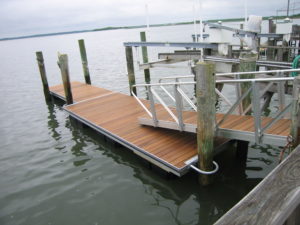
The water can sometimes be an unpredictable place, especially in today’s world. The rampant extreme weather and rising water levels can create a potentially damaging environment for the dock unless it has the ability to adjust accordingly. This is one of the most important features of a floating dock. The use of buoyant floats as opposed to pillars of wood makes the dock system always be above the water levels, ensuring that you will always have access to your boat. Even at Bristol Industries of PA, we always design our aluminum docks with an exclusive non-skid surface and Rotex™ decking to guarantee that your walk across will be absolutely safe, no matter how harsh the storm the other night was.
- Installation
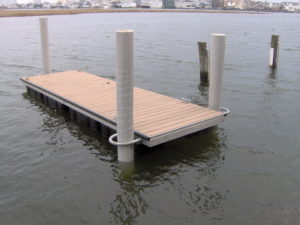
One of the biggest advantages floating docks have over fixed is how easy they are to install. Building a fixed dock can be a very long, complex process. Floating docks on the other hand, are delivered in sections and are very lightweight to make installation as simple as possible. This set-up also makes the dock very easy to transport and store for when the season ends.
- Maintenance
If something is complex to build, it is most likely that maintaining it will also be complex, and fixed docks are no different. Not just routine cleaning, but also leveling, inspecting, and sometimes even buying new materials. Meanwhile, floating docks are famous for requiring very little maintenance, being made of material resistant to corrosion, and having float drums that are very easy to replace even in the rare event of a predicament.
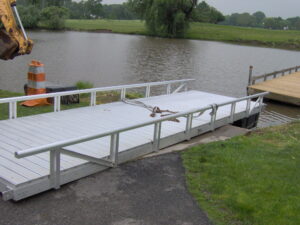
If you would like to know about how Bristol Industries of PA can supply you with your very own floating dock, give us a call at 215-493-7230 or request a quote today!